Native American Flutist · Published 10 November 2026
What healing music means in Indigenous traditions, how it differs from popular sound-healing, and what specific traditions can and cannot be shared with outsiders.
"Healing music" means different things in different contexts. In popular wellness culture, it most often refers to atmospheric music marketed for relaxation and stress reduction — a usage I covered honestly in my post on sound healing. In Indigenous traditions, the phrase carries a different weight. This post is an attempt — careful, partial — to point toward what it means in those traditions, while respecting that much of what those traditions hold is not appropriate to share publicly.
In many Indigenous traditions of North America, music is integrated into healing practices that are part of broader cultural and spiritual frameworks. The Navajo Blessingway, the Lakota Yuwipi, the songs of the Native American Church peyote ceremonies, the various Eastern Woodlands medicine society songs, the healing songs of Pacific Northwest traditions — each is held within its own specific cultural framework. Each has its own teachings about what music is doing, who can perform it, when it is appropriate, and what role it plays in the healing process.
Crucially: in most of these traditions, the music is not separate from the broader practice. There is no "Indigenous healing music" you can listen to in isolation that would work the way an aspirin does. The music is part of a larger ceremonial container that includes prayer, plant medicine, community, attention, particular times of year or moments of life. To extract the music from that container is to remove the part of it that produces the effect the tradition describes.
A meaningful portion of the modern "sound healing" industry has borrowed language and aesthetic from Indigenous traditions without engaging with the framework those traditions belong to. Sound bath sessions described as "shamanic" without any connection to specific Indigenous traditions. Music marketed as "Native American healing music" recorded by non-Indigenous artists with no cultural lineage. Wellness practitioners using the language of "medicine songs" while operating outside the cultural communities that hold those songs.
This is not necessarily malicious. Often it is the result of genuine respect for Indigenous traditions combined with imperfect understanding of where the lines of appropriate use sit. But the effect — when traditions are borrowed without context, when sacred terms are diluted in commercial contexts, when non-Indigenous practitioners profit from aesthetic associations they do not have lineage to claim — is a kind of cultural appropriation that Indigenous communities have rightly pushed back against.
The honest response, for non-Indigenous listeners and practitioners: use the actual research on music and the nervous system (which is real and well-documented — see my post on sleep and anxiety) rather than wellness vocabulary borrowed from Indigenous traditions. Listen to Indigenous music. Support Indigenous artists. But do not claim healing-tradition authority that you do not have.
Some Indigenous music is recorded and released specifically for public listening. Most of the catalog of Canyon Records, much of the contemporary work by Indigenous artists across genres, the social and exhibition powwow songs released publicly — these are intended for broad listening and respond well to attention from any listener.
Other Indigenous music is not for public release. Ceremonial songs that are held within specific communities, songs that have been entrusted to specific keepers, music that is bound to particular sacred contexts. These are not "secret" in the conspiratorial sense; they are held the way many cultures hold their most important practices — with care for who learns them, who plays them, when they are appropriate, and what they require of the practitioner.
For a non-Indigenous listener interested in this terrain, the simple rule that works: listen to what has been deliberately released; do not pursue or expect access to what has not been. The boundary is meaningful and worth respecting even when you don't fully understand it.
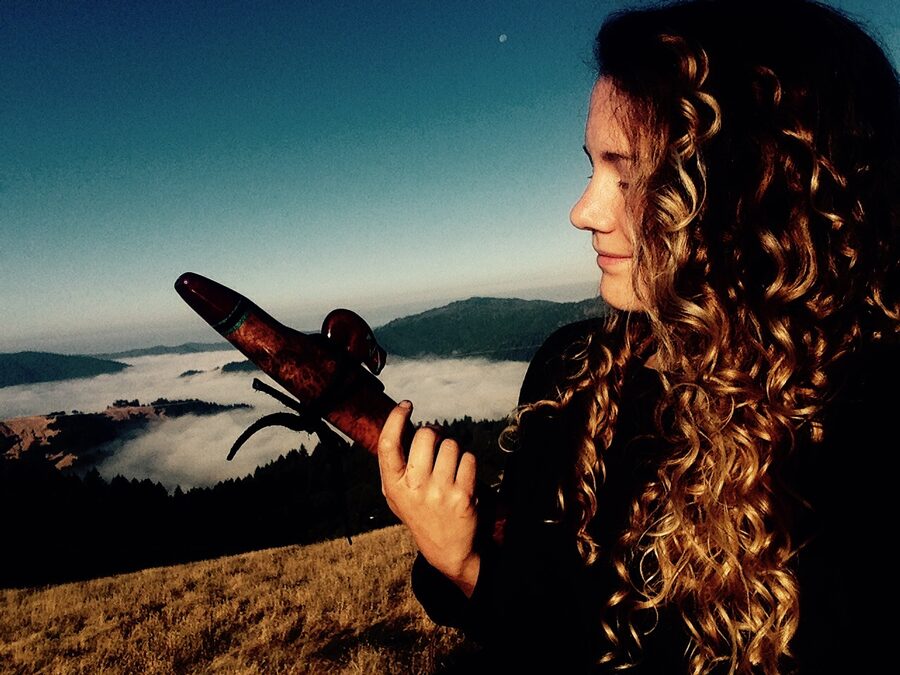
I play the Native American flute as a flutist with Tejana lineage — see Songs for the Crossing for the longer framing. My own performances at memorials, retreats, and contemplative gatherings draw on the well-documented physiological effects of slow instrumental music on the nervous system. They do not claim authority over any specific Indigenous healing tradition.
The music does what good music does — it calms, holds, supports attention. That is real. It is not "shamanic" or "medicine music" in the technical traditional sense. Naming it accurately matters.
Heritage Month is a good time to think clearly about what we borrow and what we honor when we engage with Indigenous traditions. The phrase "healing music" sits at a place where genuine cultural traditions and commercial wellness language overlap in ways that are not always clean. Holding the distinction honestly is one small thing any of us can do.
For more on the broader question of cultural context around the instrument I play, see The Complete Guide to the Native American Flute. For the parallel essay on music and mourning specifically, see Songs for the Crossing.