Native American Flutist · Published 1 September 2026
What sound healing actually is, where the research supports it, and why the Native American flute is one of its most widely used instruments.
"Sound healing" is a term that covers a wide range of practices, from peer-reviewed clinical music therapy to wellness-industry sessions with unverified claims. The Native American flute shows up across most of that range. This post is an honest look at what sound healing actually is, where the research supports it, where it doesn't, and why this particular instrument has become one of the most widely used in the practice.
"Sound healing" is a popular umbrella term for practices that use sound — singing bowls, tuning forks, gongs, voice, flutes, drums — to support relaxation, meditation, or therapeutic outcomes. The practice ranges from formal music therapy (a clinical profession with board certification, used in hospitals, hospices, and rehabilitation settings) to sound baths (a wellness practice popular in yoga studios) to private one-on-one sessions with practitioners of widely varying training.
The terminology is loose. A trained music therapist working in a children's hospital is doing something fundamentally different from a yoga studio's monthly sound bath, even though both might be described as "sound healing." Anyone considering paying for a sound healing session is well served by asking what specific training the practitioner has and what claims they are making.
A 2017 study published in the Journal of Evidence-Based Complementary & Alternative Medicine on Tibetan singing bowl meditation found significant reductions in tension, anger, fatigue, and depression among participants. Broader reviews of music's effects on the brain and body consistently show measurable changes in heart rate variability, cortisol levels, blood pressure, and self-reported anxiety after listening to slow, instrumental music.
These are real, measurable effects. What they are not is mystical. The mechanism is the same one covered in my post on flute music for sleep and anxiety: slow, sustained instrumental sound activates the parasympathetic nervous system through vagus nerve stimulation, slows the breath, and gently shifts brainwave activity toward more relaxed states. The body responds to sound; that is a biological fact. Whether that response is called "sound healing" or "music-induced parasympathetic activation" is a matter of vocabulary.
Where the research does not support sound healing: any specific claim about sound frequencies "healing" diseases, balancing chakras to measurable effect, or "tuning" individual organs. These are wellness-industry claims with no peer-reviewed support. The honest middle ground is that sound has real, measurable physiological effects on relaxation and mood; specific claims about healing illness should be treated with skepticism.
The Native American flute is one of the most widely used instruments in modern sound-healing contexts, alongside crystal singing bowls, tuning forks, and gongs. The reasons are mostly the same as those that make it work for sleep and anxiety:
In a typical sound bath, a practitioner might use a Native American flute for the opening ten to twenty minutes — slow, sustained phrases that settle the room and slow participants' breathing — then transition into crystal bowls, gongs, or other instruments. In one-on-one sessions, the flute might be used continuously over a thirty-to-sixty-minute session as the practitioner moves around the recipient.
The drone flute shows up particularly often in these contexts, because the sustained fundamental tone is well-suited to the meditative anchor that sound healing tries to provide.
Honest practitioners distinguish themselves by:
Practitioners making large claims about specific health outcomes, charging premium prices, or treating the instrument's cultural origins carelessly should be approached with healthy skepticism.
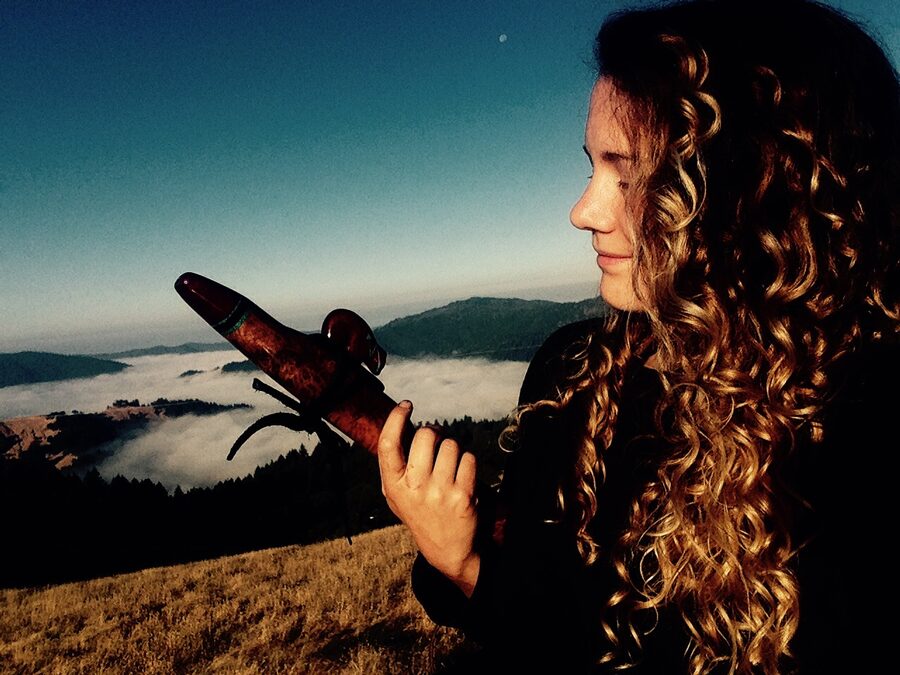
I play at sound-healing-adjacent contexts — retreats, intimate gatherings, meditation events — without describing what I do as "sound healing." I am a flutist whose music supports the same outcomes that good sound healing supports: relaxation, reflection, a calming of the nervous system. I make no claims about specific health effects. What I do is play music that helps people slow down. The body does the rest.
For more on what the music sounds like across these settings, see What Does a Native American Flute Sound Like?. For the broader picture of the instrument and the practice, see The Complete Guide to the Native American Flute. If you'd like to bring this kind of music to a retreat, meditation event, or private gathering, private event bookings are open worldwide.