Native American Flutist · Published 8 October 2026
The second Monday in October. A reflection on where the day came from, why it shares a date with Columbus Day, and what a flute can bring to it.
On Monday, October 12, much of the United States marks Indigenous Peoples' Day. This year the day finds me in Sydney, a long way from the borderlands my family's lineage traces to. Before it arrives, a short reflection: where the day came from, why it shares a date with Columbus Day, and what I hope a flute can bring to it.
The idea is older than most people realize. In 1977, Indigenous delegates gathered in Geneva for a United Nations conference on discrimination against Indigenous populations in the Americas. They resolved to observe October 12, the day of so-called "discovery," as an International Day of Solidarity with the Indigenous Peoples of the Americas.
South Dakota was the first state to act. Its legislature replaced Columbus Day with Native Americans' Day, first observed in 1990. Two years later, in 1992, on the five-hundredth anniversary of Columbus's first voyage, Berkeley, California became the first city to adopt the name Indigenous Peoples' Day. It has marked the day every year since. A growing number of states, cities, and schools have followed. Some replaced Columbus Day outright; others observe both on the same Monday.
Federally, the second Monday of October is still Columbus Day. It has been a federal holiday since 1937, and changing its name would take an act of Congress. So across most of the country, the two names arrive on the same morning.
The date is the point. On October 12, 1492, Columbus's ships reached an island in the Bahamas that the Lucayan people called Guanahani. The Lucayans, a branch of the Taíno, had lived in those islands for centuries. For a long time the day was told as a story of discovery, and the people who were already there barely figured in it.
Indigenous Peoples' Day keeps the same square on the calendar and turns attention toward them, and toward the Indigenous nations across the Americas who are still here. For many Indigenous people, celebrating Columbus means celebrating the beginning of colonization, and everything that followed it. For many Italian Americans, Columbus Day grew out of a long fight against real prejudice, and that history deserves respect too. I don't think honoring one requires erasing the other. I do think the people who were here first belong at the center of the day, not at its edge.
I am Native American by lineage. My family's lineage traces to the Indigenous peoples of Nuevo León in the Texas/Mexico borderlands, and the Spanish colonization that began with that landfall in 1492 reached those borderlands within about a century. The specific traditions of those nations were significantly disrupted by it, and the lineage I carry is, in many ways, fragmentary. So the day is partly personal for me: a reminder of what was lost, and of what survived anyway.
It is also a day of gratitude. The instrument I play was kept alive by other Indigenous nations whose specific traditions I do not claim. Indigenous musicians led its modern revival, and their work is the reason I could learn it at all. I think of them on this day.
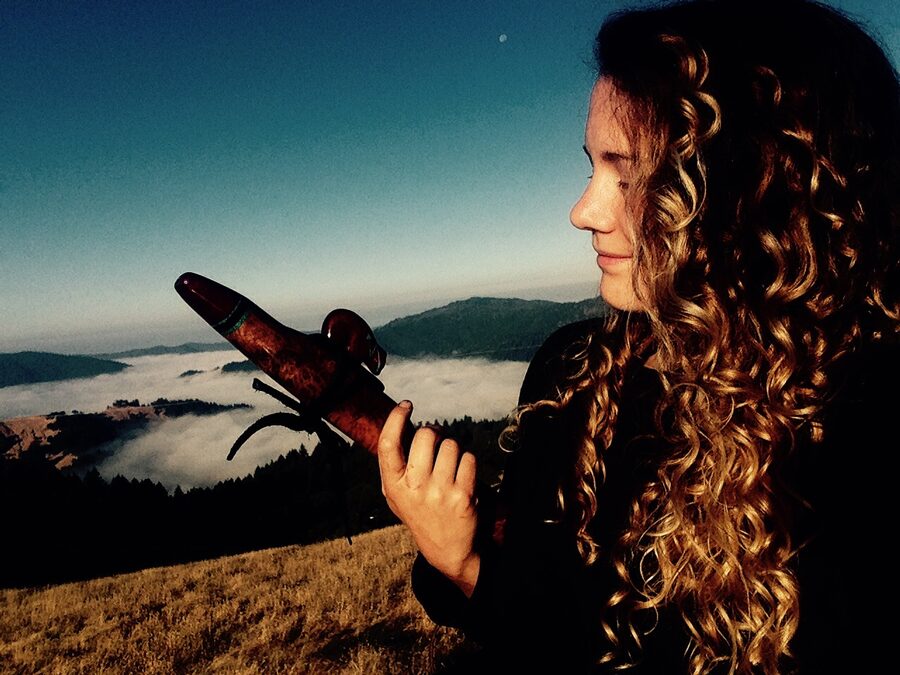
A flute can't settle any argument about the second Monday in October. What it can do is ask for a few minutes of attention, without making a speech. If you'd like something to listen to on the day, this is one of my recordings: a Native American flute in the key of E, exploring the instrument's expressive voice.
Play it while you read about the people whose land you're on, or just let it run quietly while you think about who was here first.
A few small ways to make it more than a date on the calendar:
November is Native American Heritage Month, and over the coming weeks this journal turns toward it: the music, the history, and the traditions the flute belongs to. For the bigger picture of the instrument and where it comes from, start with The Complete Guide to the Native American Flute.